FRB 20210601A: Extreme Temporal Clustering in a Repeating Fast Radio Burst Source as Evidence for a Hidden Class of Episodic Repeaters FRB 20210601A:重复FRB极端时间聚集性揭示隐藏的阵发性重复暴子群
FRB 20210601A: Extreme Temporal Clustering in a Repeating Fast Radio Burst Source as Evidence for a Hidden Class of Episodic Repeaters FRB 20210601A:重复FRB极端时间聚集性揭示隐藏的阵发性重复暴子群
核心课题、机制与切入建议 Problem, Method & Entry
物理假设、图表与结果边界 Physical Models, Figures & Results
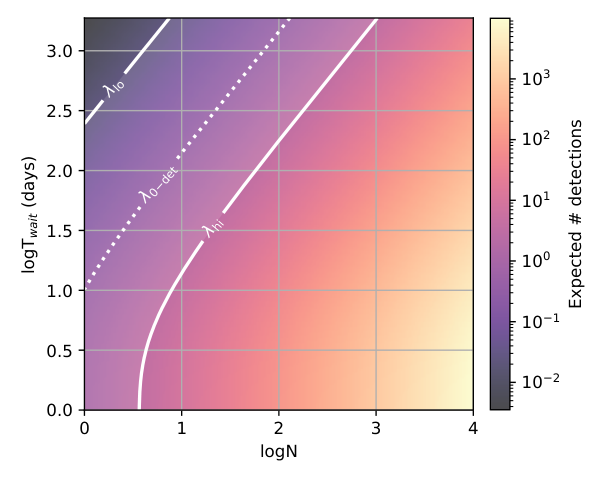
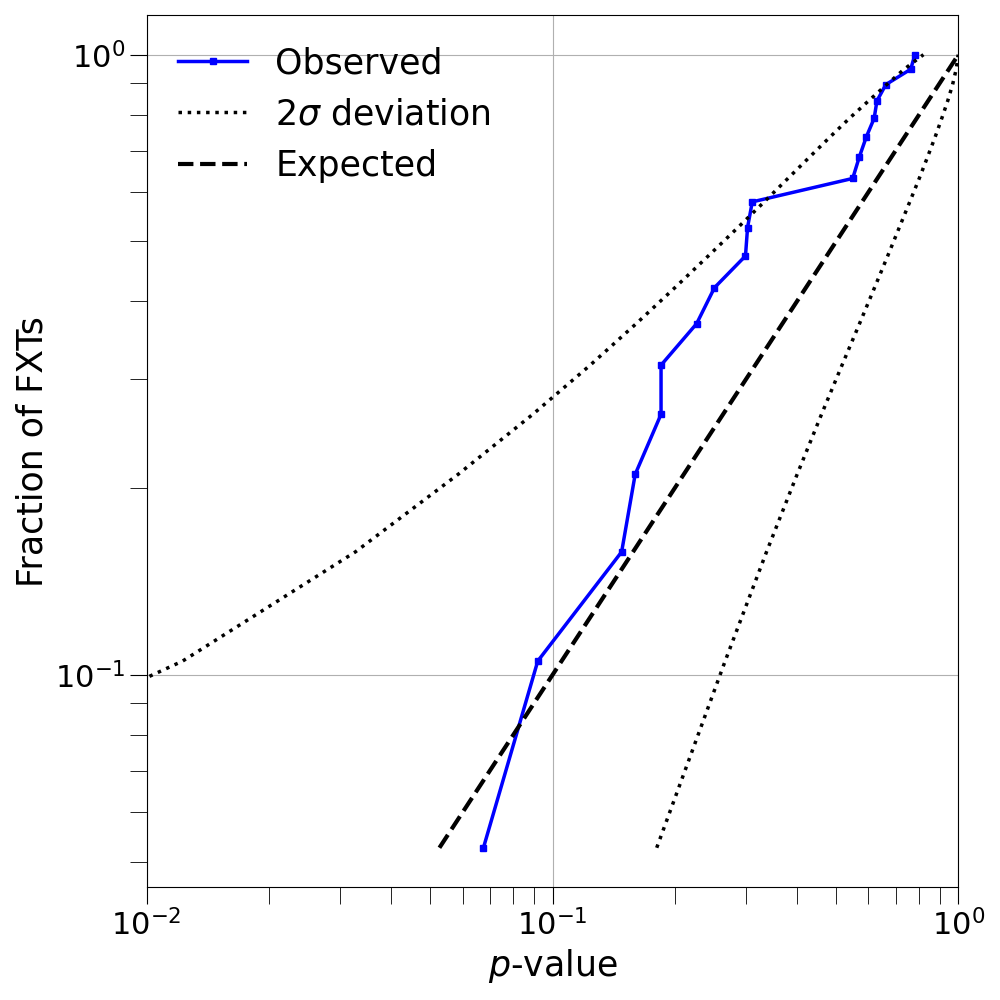
原图说明 (Fig. 5)
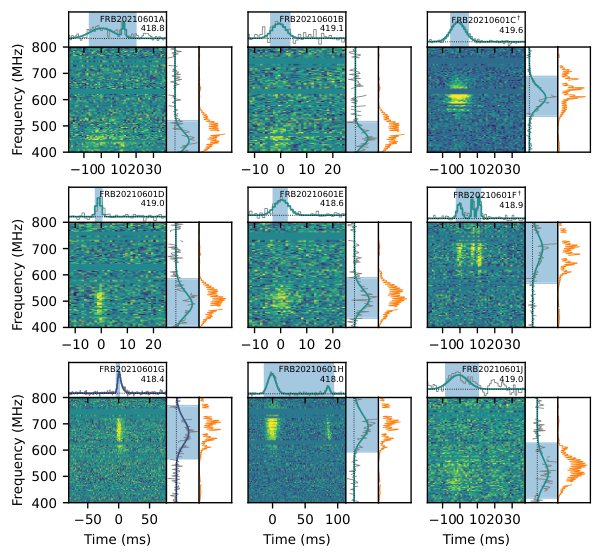
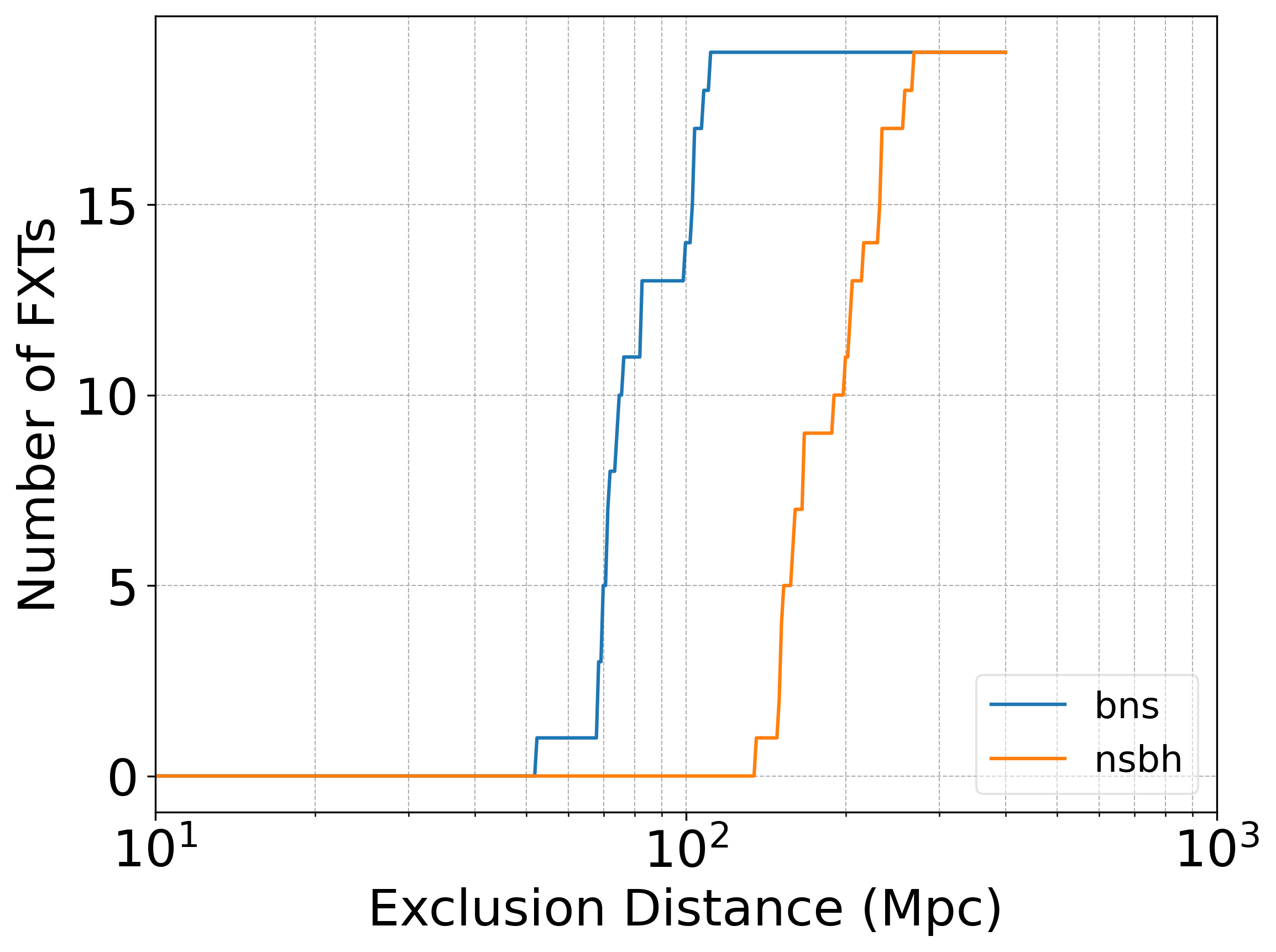
原图说明 (Fig. 1)
学术脉络、进展比较与前置建议 Lineage, Context & Progress
自动筛选未建立论文与组内 Work 的科学关系。
- I Introduction: “Despite a steadily growing sample of thousands of FRB detections and rapid progress in localizing and characterizing repeating FRBs, the relationship between repeaters and one-off events remains unsettled”
- II Observations: “On 2021 June 1, CHIME/FRB detected a series of nine bursts from FRB 20210601A within 106.5 s, all above the real-time detection threshold of S/N.”
- III.3 Repetition & Periodicity Search: “The temporal behavior of FRB 20210601A is strikingly clustered: nine bursts detected within a single 106.5 s interval are bracketed by extended intervals of apparent quiescence across multi-year baselines”
- IV.1 Comparison of FRB 20210601A to other CHIME/FRB Repeaters: “FRB 20210601A distinguishes itself from other sources through its combination of very brief peak activity and subsequent complete apparent quiescence.”
- IV.2 Peak Activity and Implications for Energy Budget: “To contextualize the exceptional clustering observed during this 106.5 s active window, we compared the burst count distribution of FRB 20210601A to that of the two most prolific repeating FRB sources monitored at much higher sensitivity”
- IV.3 Interpretation and Analogs: “In contrast, “passive” or obscuration models posit that the source is continuously active, but bursts are detectable only during a narrow transparency window set by absorption, scattering, or free–free opacity in the circumstellar”
- IV.4.1 Forecasting CHIME/FRB Detections of Episodic Repeater Population: “The model predicts the detection rate of sources entering episodic burst storms.”
证据审计与信源材料 覆盖:正文全文 展开核验 ▾
覆盖范围:已检查版本匹配的完整 TeX 正文;版本 arXiv:2610.31365v1
- 📦 arXiv TeX 源码包 位置:Full bodyComplete, revision-matched arXiv TeX source package
sha256:9b6899ed6c490754...
- 未进行独立同行评审或逐项复算。
- 源文件中的图像未进行视觉核对。
原始摘要与来源Original abstract and source
阅读范围与依据Coverage and evidence
实际阅读范围:已检查版本匹配的完整 TeX 正文;版本 arXiv:2610.31365v1;检查材料:Introduction、FRB 20210601A: Extreme Temporal Clustering in a Repeating Fast Radio Burst Source as Evidence for a Hidden Class of Episodic Repeaters、I Introduction、II Observations、III Results、III.1 Sky Position、III.2 Burst Properties、III.3 Repetition & Periodicity Search、III.4 Counterpart Search、IV Discussion、IV.1 Comparison of FRB 20210601A to other CHIME/FRB Repeaters、IV.2 Peak Activity and Implications for Energy Budget、IV.3 Interpretation and Analogs、IV.4 Poisson Limits on Episodically Active Repeater Population、IV.4.1 Forecasting CHIME/FRB Detections of Episodic Repeater Population、V Conclusions、References、Appendix A Supplemental Figures & Tables、Instructions for reporting errors。
This guide uses the recorded body material; inspected sections: Introduction, FRB 20210601A: Extreme Temporal Clustering in a Repeating Fast Radio Burst Source as Evidence for a Hidden Class of Episodic Repeaters, I Introduction, II Observations, III Results, III.1 Sky Position, III.2 Burst Properties, III.3 Repetition & Periodicity Search, III.4 Counterpart Search, IV Discussion, IV.1 Comparison of FRB 20210601A to other CHIME/FRB Repeaters, IV.2 Peak Activity and Implications for Energy Budget, IV.3 Interpretation and Analogs, IV.4 Poisson Limits on Episodically Active Repeater Population, IV.4.1 Forecasting CHIME/FRB Detections of Episodic Repeater Population, V Conclusions, References, Appendix A Supplemental Figures & Tables, Instructions for reporting errors.
- arXiv body material Full body; Complete, revision-matched arXiv TeX source package
Population studies of fast radio burst (FRB) repetition typically model sources using a single distribution of steady, time-averaged burst rates, yet individual sources show significant departures from this assumption. Here we present FRB 20210601A, a source discovered by the Canadian Hydrogen Intensity Mapping Experiment FRB project (CHIME/FRB) that represents the most extreme such departure yet identified. The source produced at least nine bursts within a single 106.5 s interval -- the highest instantaneous burst rate yet reported from a repeating FRB source at Jy ms fluences -- yet remained otherwise undetected despite hr of exposure spanning 7 yr. The active interval occurred while the source was in a side-lobe of the CHIME/FRB digitized beams, implying an instantaneous burst rate higher ( 21 bursts) at main-lobe sensitivity. The source's intense, brief burst storm flanked by apparent quiescence despite substantial exposure is unique among the CHIME/FRB repeater sample, although its burst morphology, excess dispersion measure ( pc cm), Faraday rotation measure ( rad m), and temporal scattering ( ms at 600 MHz) are otherwise typical. Modeling a population of episodically active repeaters (i.e., short burst storms separated by long recurrence times) and accounting for declination-dependent exposure, we forecast additional source discoveries similar to FRB 20210601A over the next decade of CHIME/FRB operations, corresponding to a CHIME/FRB-detectable population of sources (68% credible interval). These results demonstrate that highly episodic repeaters could constitute a selection-biased but detectable component of the FRB population, possibly reflecting distinct magnetospheric states or triggering mechanisms.
这里保留 arXiv 提供的原始摘要;它是来源材料,不表示独立验证。
This is the original arXiv abstract used as source material; it does not represent independent verification.
打开 arXiv:2610.31365v1 原文页面Open arXiv:2610.31365v1 source page 在 NASA ADS 查看NASA ADS ↗
Click the button above to view full quantitative analysis and verbatim evidence in dialog.