AstroLineage · Daily Radar · Archive

Daily arXiv Radar · Archive

Batch 2026-10-30 (Beijing Time UTC+8) · US 2026-10-29 (Thu) · Week: 2026-W44 · Latest Daily → · Weekly Synthesis → · Historical Archives →

🏷️ Topics:

Must Read 1 papers

  1. ⭐ Must Read arXiv:2610.38673 📄 PDF Full Body
    Danat Issa, Ore Gottlieb, Jonatan Jacquemin-Ide et al.

    Black Hole Spin Evolution in Magnetized Accretion Flows

    Problem
    Prior GRMHD simulations assumed static black hole spacetimes and explored only binary extremes (pure SANE or saturated MAD), lacking continuous quantitative descriptions of BH spin evolution and equilibrium spins across intermediate magnetic flux levels.
    Result
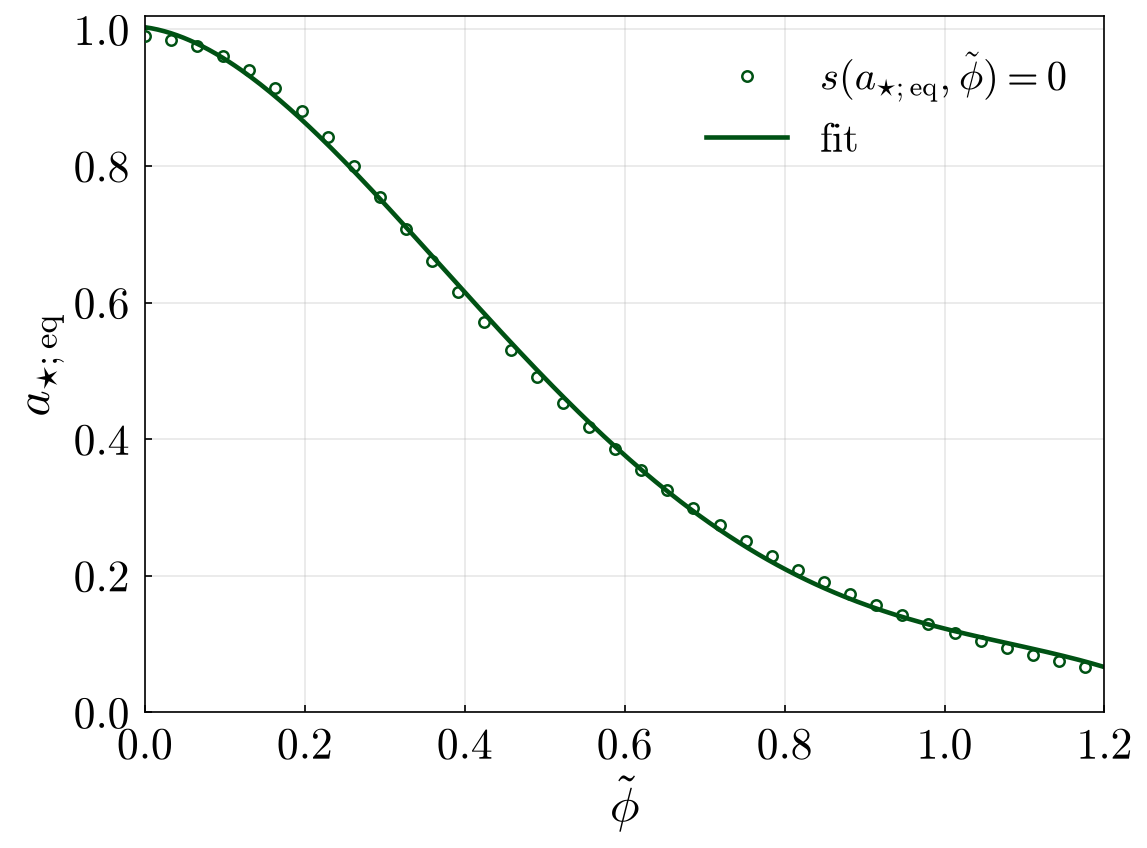
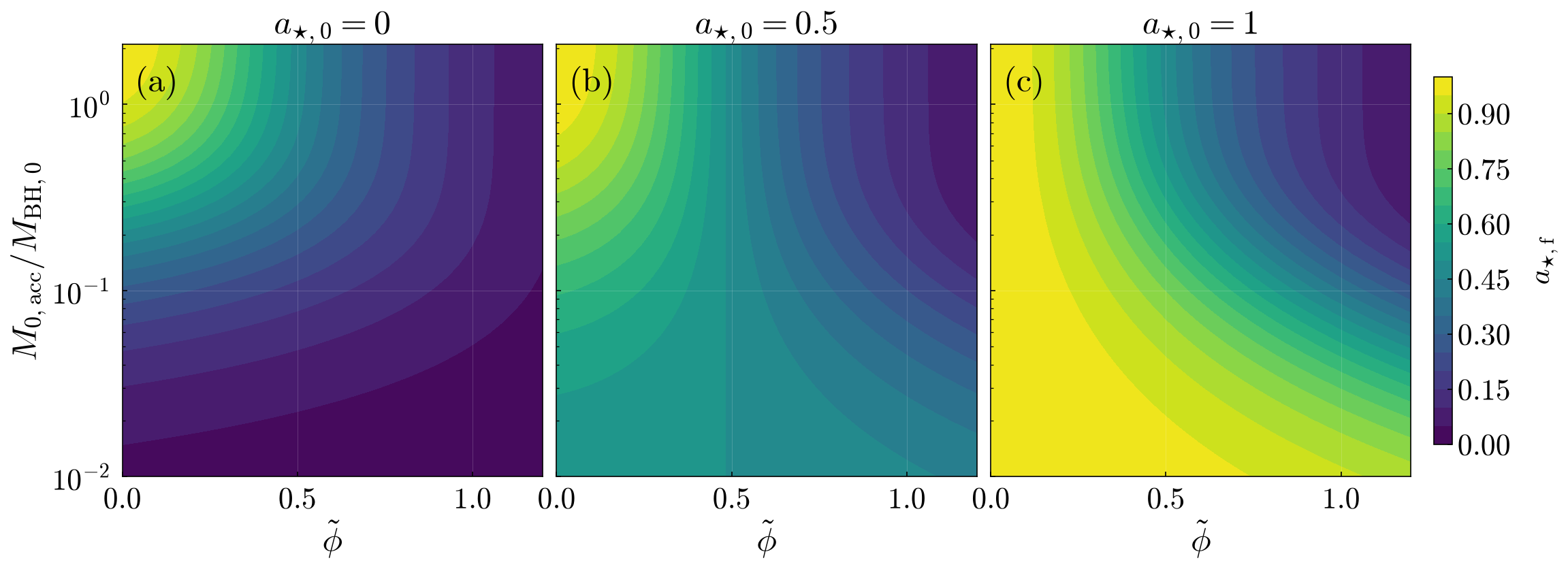
    The equilibrium spin declines steeply with normalized horizon magnetic flux ϕ~≡ϕ/ϕMAD\tilde{\phi} \equiv \phi / \phi_{\rm MAD}, dropping from a⋆;eq≈0.9a_{\star;{\rm eq}} \approx 0.9 in weakly magnetized flows (ϕ~≲0.2\tilde{\phi} \lesssim 0.2), through a⋆;eq(ϕ~=0.5)≈0.5a_{\star;{\rm eq}}(\tilde{\phi}=0.5) \approx 0.5, down to a⋆;eq≈0.05–0.06a_{\star;{\rm eq}} \approx 0.05\text{--}0.06 at MAD saturation (ϕ~=1\tilde{\phi} = 1). In the sustained MAD regime, the BH reaches within 3%–6%3\%\text{--}6\% of its equilibrium spin by accreting only ≲50%\lesssim 50\% of its initial mass.
    Reason
    This paper presents the first systematic study of black hole spin evolution across the continuous transition from weakly magnetized (SANE) to magnetically arrested disks (MAD) using 3D GRMHD simulations with live spacetime updates, providing an analytical subgrid prescription for spin-up/spin-down equilibria in relativistic jets and compact accretors.

Followed 6 papers

  1. 📌 Follow arXiv:2610.38765 📄 PDF GW
    Tore Boybeyi, Vuk Mandic, Joseph Romano

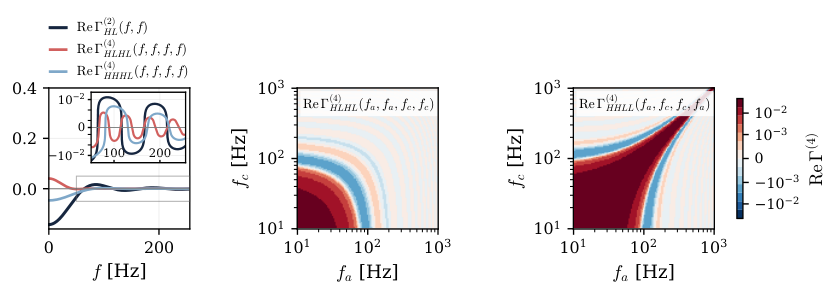
    Constructing likelihoods for a non-Gaussian gravitational-wave background

    Result
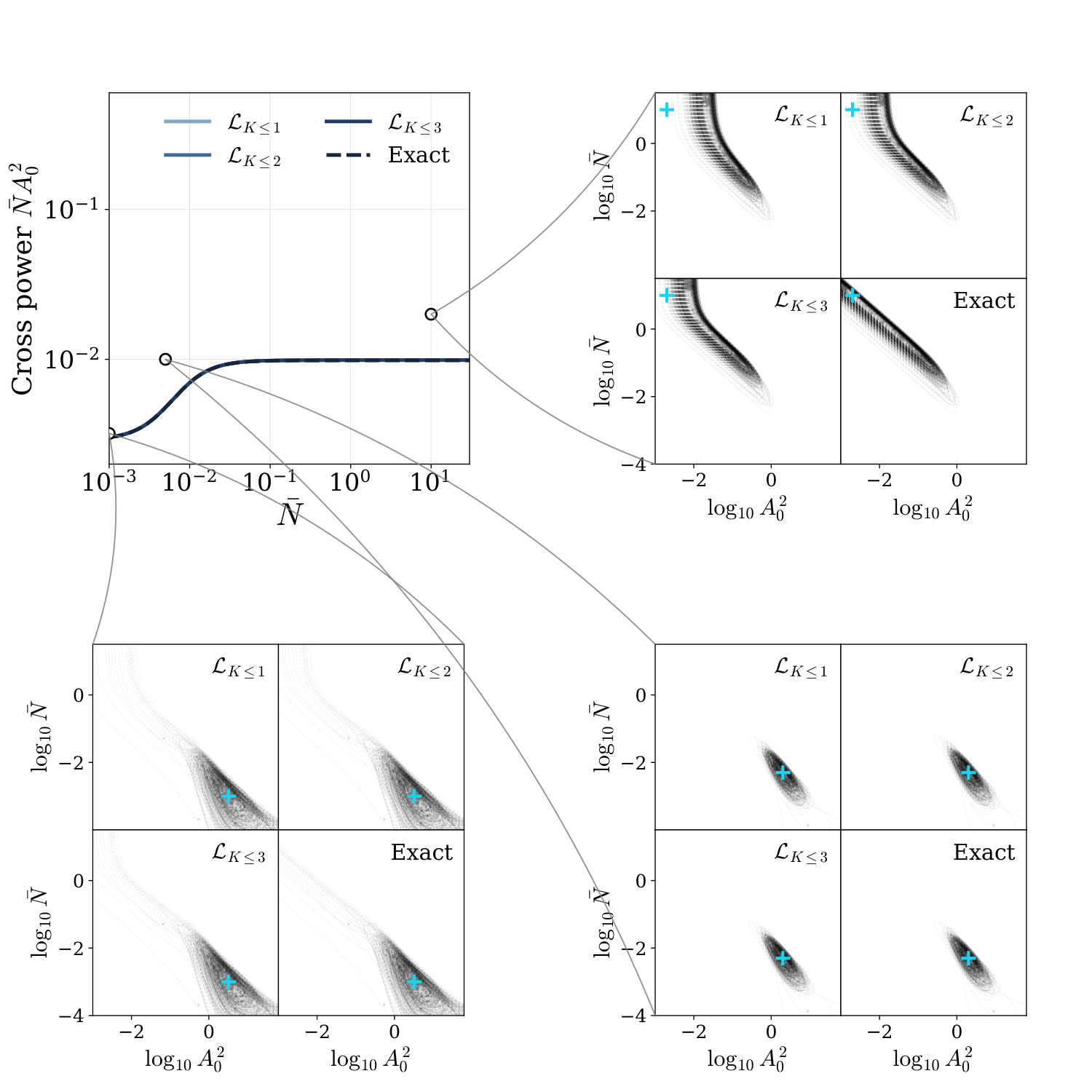
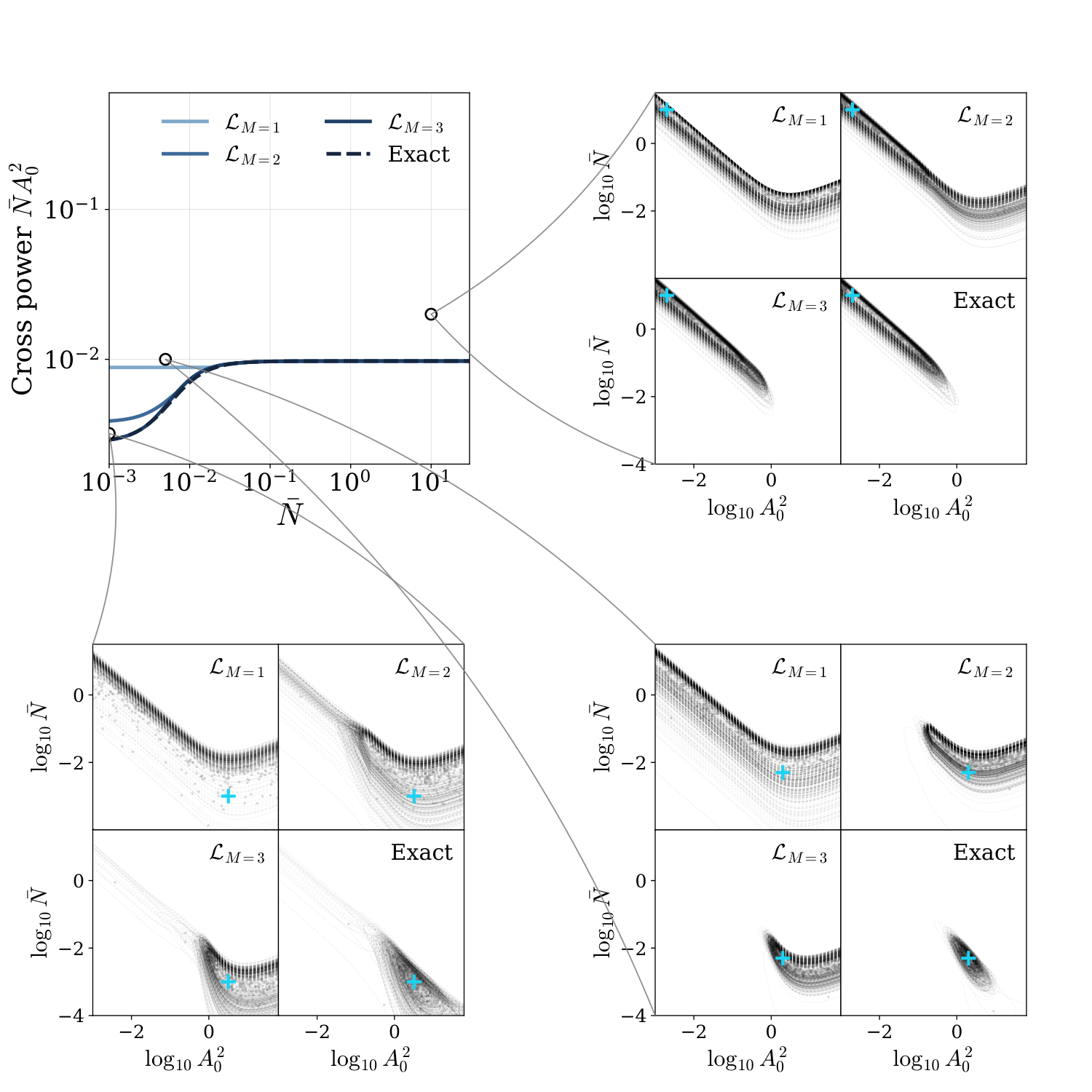
    The exact non-Gaussian GWB likelihood is decoupled via Hubbard-Stratonovich transformation into the characteristic function of single mergers z(η;Λ)z(\eta;\Lambda). For a toy model with segment noise σ2\sigma^2, event rate Nˉ\bar{N}, and amplitude variance A02A_0^2, the exact detection floor flattens at NˉA02≃10−2\bar{N} A_0^2 \simeq 10^{-2} for Nˉ≳10−2\bar{N} \gtrsim 10^{-2} and drops by a factor of ∼3\sim 3 toward Nˉ=10−3\bar{N} = 10^{-3}. The single-component likelihood LM=1\mathcal{L}_{M=1} is sensitive only to the degenerate combination NˉA02\bar{N} A_0^2, whereas multi-component Gaussian mixtures LM\mathcal{L}_M converge to the exact detection threshold with only 3 components.
    Reason
    The paper develops a rigorous characteristic-function formalism to construct tractable likelihoods and optimal sufficient statistics for non-Gaussian stochastic gravitational-wave backgrounds produced by compact binary coalescences (BBH/BNS/NSBH). It directly informs searches for intermittent and popcorn-type compact object merger backgrounds relevant to high-energy transient source populations.
  2. 📌 Follow arXiv:2610.38766 📄 PDF GW
    Tore Boybeyi, Vuk Mandic, Joseph Romano

    Unifying stochastic and deterministic signals: a practical search for the intermittent binary black-hole background

    Result
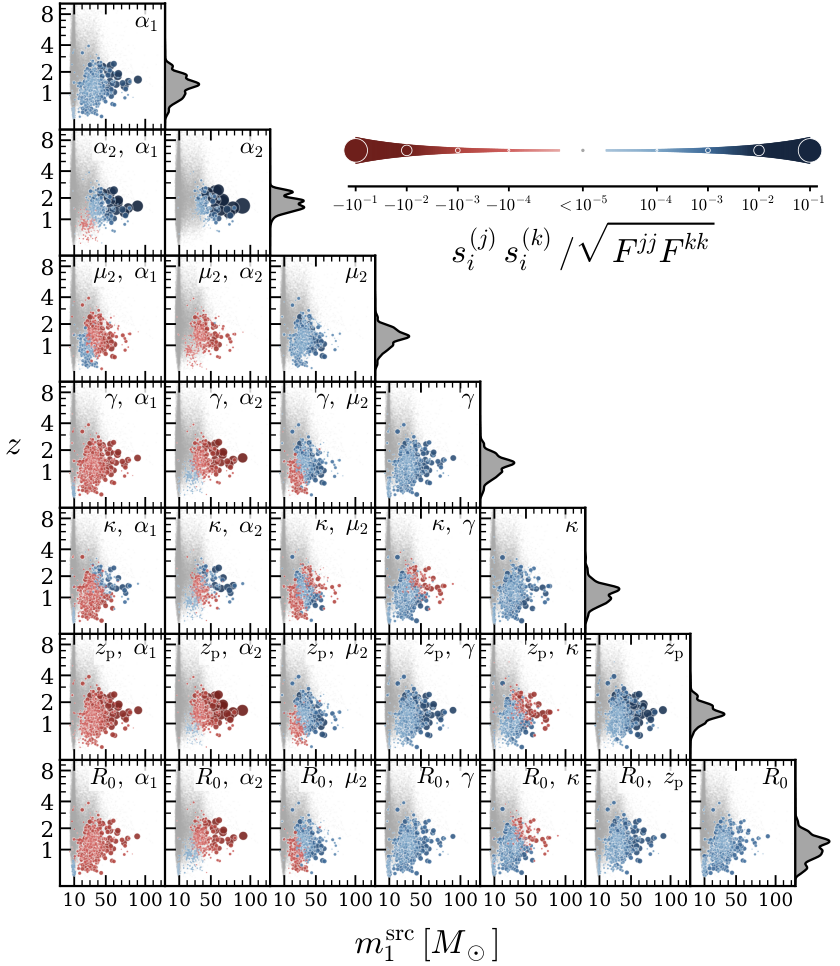
    Applying the search to simulated O4 LIGO data allows combining unresolved subthreshold events with resolved catalogs, successfully pinning down the BBH merger peak redshift to zp=1.77−0.74+0.65z_p = 1.77_{-0.74}^{+0.65} with local rate R0=19.1 Gpc−3 yr−1R_0 = 19.1\,\mathrm{Gpc}^{-3}\,\mathrm{yr}^{-1}. Phase-randomization tests demonstrate that the background evidence completely vanishes (cumulative log Bayes factor dropping from ln⁡BU≈1.3×10³\ln \mathcal{B}_{\mathrm{U}} \approx 1.3 \times 10^3 to −1.3-1.3) without inter-frequency bin correlations, showing single-bin cross-correlations fail to capture intermittent chirp backgrounds.
    Reason
    The paper develops a unified marginalized likelihood expansion that bridges stochastic background cross-correlation and matched filtering for intermittent binary black hole mergers, showing that inter-frequency correlations recover crucial population parameters.
  3. Paul C. Duffell, Dillon Hasenour

    SuperCrude EoS: A Simple, Analytical, and Reasonably Accurate Equation of State for Astrophysical Fluid Dynamics

    Result
    SuperCrude models the fluid via decomposed components P=Pdeg+Pgas+Prad+PpairsP = P_{\mathrm{deg}} + P_{\mathrm{gas}} + P_{\mathrm{rad}} + P_{\mathrm{pairs}} and E=Edeg+Egas+Erad+Epairs\mathcal{E} = \mathcal{E}_{\mathrm{deg}} + \mathcal{E}_{\mathrm{gas}} + \mathcal{E}_{\mathrm{rad}} + \mathcal{E}_{\mathrm{pairs}}, recovering sound speed cs=(Bdeg+BTh)/(ρh)c_s = \sqrt{(B_{\mathrm{deg}} + B_{\mathrm{Th}})/(\rho h)} with relativistic enthalpy h=1+(P+E)/(ρc2)h = 1 + (P + \mathcal{E})/(\rho c^2). In hydrodynamic closures P(ρ,E)P(\rho, \mathcal{E}), errors are <5%<5\% (mostly <10−3<10^{-3}) relative to helmeos; the peak error in ΓH≡1+P/E\Gamma_H \equiv 1 + P/\mathcal{E} is 1.3%−2.5%1.3\% - 2.5\% and Γ1\Gamma_1 error is ≲5%\lesssim 5\%. In 1D hydro tests, density L1L_1 error is 3.64×10−33.64 \times 10^{-3}, and single-zone execution time decreases from 571 ns571\,\mathrm{ns} (helmeos) to 89.7 ns89.7\,\mathrm{ns}.
    Reason
    The paper introduces SuperCrude, a fully analytic, physically motivated equation of state (EoS) designed for explosive astrophysical hydrodynamics (e.g. supernovae and compact object flows). It circumvents the table-boundary and GPU porting bottlenecks of tabulated EoS like helmeos, achieving competitive hydrodynamical accuracy and >3x speedup.
  4. 📌 Follow arXiv:2610.38956 📄 PDF 🔭 GW170817 GRBGW
    Sk Md Adil Imam, Macarena Lagos

    Probing Scalar Polarization with Next-Generation Gravitational-Wave Detectors: The Roles of Detector Geometry and Source Inclination

    Result
    Next-generation detectors (2×CE2\times\mathrm{CE} and ETΔ\mathrm{ET}\Delta) improve constraints on the breathing scalar amplitude αB\alpha_B by a factor of ∼40\sim 40--85×85\times over the O5 HLV network. Due to the intrinsic antenna pattern Yb(ι)=3/2 sin⁡2ιY_b(\iota) = \sqrt{3/2}\,\sin^2\iota, the constraint width scales as σ(αB)∝1/sin⁡2ι\sigma(\alpha_B) \propto 1/\sin^2\iota; incorporating electromagnetic jet inclination priors tightens αB\alpha_B constraints by ≈56×\approx 56\times (reducing the 68%68\% uncertainty from 2.3×10−22.3\times 10^{-2} to 4.0×10−44.0\times 10^{-4}). The triangular geometry of ETΔ\mathrm{ET}\Delta provides consistently superior separation of scalar polarization, yielding ∼2×\sim 2\times tighter bounds on αB\alpha_B (±1.9×10⁻⁴\pm 1.9\times 10^{-4}) compared to CE (±3.9×10⁻⁴\pm 3.9\times 10^{-4}) for GW170817.
    Reason
    The paper investigates the detection and constraints on non-Einstein scalar breathing polarizations (αB\alpha_B) from binary neutron star mergers using next-generation gravitational-wave detectors (Cosmic Explorer and Einstein Telescope), demonstrating a critical degenerated scaling σ(αB)∝1/sin⁡2ι\sigma(\alpha_B) \propto 1/\sin^2\iota with the relativistic jet/source inclination angle.
  5. 📌 Follow arXiv:2610.40024 📄 PDF FRBGW
    Rajendra Prasad Bhatt, Rudraksh Verma, R. Prasad et al.

    Inverse Gertsenshteǐn-Zel'dovich Effect in Time-Independent Electromagnetic Field

    Result
    For GR tensor modes traversing a neutron star magnetosphere of radius RLC=c/ΩR_{\rm LC} = c/\Omega, the total conversion factor scales as αtot+×=4G(By(0))2RLC23c4∝(By(0))2RLC2\alpha_{\rm tot}^{+\times} = \frac{4G (B_y^{(0)})^2 R_{\rm LC}^2}{3c^4} \propto (B_y^{(0)})^2 R_{\rm LC}^2, generating an induced spectral flux density ⟨S⟩tot/fg∼0.001−1000 Jy\langle S \rangle_{\rm tot}/f_g \sim 0.001 - 1000\ \mathrm{Jy} consistent with observed FRB peak flux densities. The induced wave flux scales with the interaction length squared, (R1+R2)2(R_1 + R_2)^2, and yields completely polarized electromagnetic emission (degree of polarization Π=1\Pi = 1) reflecting the incoming gravitational wave polarization.
    Reason
    The paper establishes a generalized framework for the inverse Gertsenshteǐn-Zel'dovich effect across 6 gravitational wave polarizations in time-independent electromagnetic fields, deriving conversion efficiency scalings α∝B2R2\alpha \propto B^2 R^2 relevant to potential fast radio burst (FRB) flux densities in neutron star magnetospheres.
  6. 📌 Follow arXiv:2610.40609 📄 PDF FRB
    Manami Roy, Sanskriti Das, Smita Mathur et al.

    From Dispersion to Metallicity: Probing the Milky Way Circumgalactic Medium with Fast Radio Bursts

    Result
    Using 25 localized FRB sightlines at z<0.3z < 0.3, the bootstrap median metallicity of the Milky Way CGM is inferred to be ZMW=0.12−0.04+0.09 Z⊙Z_{\mathrm{MW}} = 0.12_{-0.04}^{+0.09} \, Z_{\odot} for diffuse baryon fraction fd=0.0f_{\mathrm{d}} = 0.0, ZMW=0.26−0.12+0.18 Z⊙Z_{\mathrm{MW}} = 0.26_{-0.12}^{+0.18} \, Z_{\odot} for fd=0.6f_{\mathrm{d}} = 0.6, and ZMW=0.39−0.20+0.26 Z⊙Z_{\mathrm{MW}} = 0.39_{-0.20}^{+0.26} \, Z_{\odot} for fd=0.8f_{\mathrm{d}} = 0.8. Even at the conservative limit fd=0.0f_{\mathrm{d}} = 0.0, the halo metallicity exceeds pristine IGM accretion (ZIGM≲0.1 Z⊙Z_{\mathrm{IGM}} \lesssim 0.1 \, Z_{\odot}), whereas fd=0.8f_{\mathrm{d}} = 0.8 produces unphysical super-solar metallicities (Z≫1 Z⊙Z \gg 1 \, Z_{\odot}) along multiple sightlines.
    Reason
    This paper establishes a novel method combining FRB dispersion measures with X-ray absorption columns to determine the metallicity of the Milky Way circumgalactic medium. It directly impacts the estimation of the Galactic foreground DM and the study of the diffuse halo baryon reservoir.
Skim (collapsed by default)

Skim 56 papers

  1. Summary
    Skim
    This paper studies blue straggler stars, stellar companions, and the Galactic history of an open cluster, with no substantive connection to the specified high-energy transient research areas.
  2. Infrared spectroscopy of the longest-period Galactic Mira variables from Palomar Gattini-IR: Identification of a candidate thermally pulsing Super-Asymptotic Giant Branch star

    Among 13 Galactic very long period (P≳1000 dP \gtrsim 1000\ \mathrm{d}) Mira variables, 12 are massive O-rich AGB stars, while IRAS 19552+3142 is identified as the longest-period (P≈1060 dP \approx 1060\ \mathrm{d}) C-rich AGB star in the Milky Way. Spectral energy distribution modeling indicates a bolometric luminosity of L1−30 μm≈(1−4)×104 L⊙L_{1-30\,\mu\mathrm{m}} \approx (1-4) \times 10^4\ L_\odot, radius R∗≈500−1000 R⊙R_* \approx 500-1000\ R_\odot, and a high dust-driven mass-loss rate: M˙≈10−4 M⊙ yr−1(τ10)(550 cm2 g−1κ10)(Rin1.5×1014 cm)(vd15 km s−1)(10−3rdg)\dot{M} \approx 10^{-4}\,M_\odot\,\mathrm{yr}^{-1}(\tau_{10})\left(\frac{550\,\mathrm{cm^2\,g^{-1}}}{\kappa_{10}}\right)\left(\frac{R_{\rm in}}{1.5\times 10^{14}\,\mathrm{cm}}\right)\left(\frac{v_d}{15\,\mathrm{km\,s^{-1}}}\right)\left(\frac{10^{-3}}{r_{\rm dg}}\right), consistent with a thermally pulsing Super-AGB (TP-SAGB) star in the hot bottom burning turn-off phase.

    SN
    Summary
    Skim
    The study focuses on Galactic long-period Mira variables and infrared spectroscopic classification of an evolved Super-AGB star candidate, which pertains to late-stage stellar evolution rather than high-energy transient physics, supernova central engines, or compact object observational signatures.
  3. Summary
    Skim
    This paper concerns black-hole–host-galaxy scaling relations and occupation fractions in simulations, without a substantive connection to the specified high-energy transient research areas.
  4. Fermion-Boson Stars in Scalar-Tensor Gravity

    未能从已检查材料中核实论文结果。

    SN
    Summary
    Skim
    This paper investigates theoretical models of static, spherically symmetric fermion-boson mixed stars undergoing spontaneous scalarization within massless Damour-Esposito-Farèse scalar-tensor gravity. It does not address FRBs, PRSs, supernova central engines, shock breakouts, relativistic jets, or high-energy transient observations.
  5. The coupled evolution of nuclear star clusters and intermediate-mass black holes in a dwarf-galaxy merger

    Simulations reveal that NSCs act as vital catalysts, merging within ∼500 Myr\sim 500\ \mathrm{Myr} and enabling IMBHs to form a hard binary with separation a<ah=[q/(4(1+q)2)]rinfa < a_{\mathrm{h}} = \left[ q / ( 4 ( 1 + q ) ^ { 2 } ) \right] r_{\mathrm{inf}} before merging via gravitational waves at tmerge∼848 Myrt_{\mathrm{merge}} \sim 848\ \mathrm{Myr}. The IMBHs grow from 103 M⊙10^3\ \mathrm{M_\odot} to M1=1.086×10⁵ M⊙M_1 = 1.086 \times 10^5\ \mathrm{M_\odot} and M2=4.119×10⁴ M⊙M_2 = 4.119 \times 10^4\ \mathrm{M_\odot}, and the resulting gravitational-wave recoil kick of vrecoil≈174.9 km s−1v_{\mathrm{recoil}} \approx 174.9\ \mathrm{km\ s^{-1}} ejects the remnant from the NSC while keeping it gravitationally bound to the host galaxy.

    SNGWMULTI
    Summary
    Skim
    This paper investigates the dynamical sinking, accretion growth, and binary coalescence of intermediate-mass black holes (IMBHs) within nuclear star clusters (NSCs) during dwarf-galaxy mergers, which lacks substantial connection to core high-energy transient astrophysical mechanisms such as FRBs/PRSs, supernova central engines, shock breakouts, relativistic jets, or high-energy neutrino emissions.
  6. Summary
    Skim
    This study concerns the detectability of dwarf-galaxy tidal debris, with no substantive connection to the listed high-energy transient research directions.
  7. Summary
    Skim
    The paper studies rotation and outburst-like brightenings in pulsating white dwarfs; it does not address the listed high-energy transient or compact-object high-energy observation topics.
  8. Summary
    Skim
    This work reports a galaxy cluster behind the Galactic plane, unrelated to the specified high-energy transient research directions.
  9. Summary
    Skim
    UnEZ is a general method for estimating galaxy redshifts and line strengths, with no substantive application to the listed research directions.
  10. Summary
    Skim
    This is a variable-star survey catalogue and classification resource, with no substantive connection to the specified high-energy transient research topics.
  11. Summary
    Skim
    The paper studies environmental quenching of satellite galaxies, which is not substantively related to the specified high-energy transient research directions.
  12. A morpho-kinematic view of the Necklace nebula

    未能从已检查材料中核实论文结果。

    Summary
    Skim
    This paper concerns the morphology and kinematics of a planetary nebula and its binary central star, without a substantive connection to the specified high-energy transient topics.
  13. Summary
    Skim
    This study concerns wave propagation and chromospheric signatures in solar magnetic elements, with no substantive connection to the specified high-energy transient research areas.
  14. Summary
    Skim
    The paper estimates the likelihood of supermassive black hole binaries in local core galaxies, but its focus on binary demographics and candidate identification has no substantial connection to the specified transient or high-energy observational topics.
  15. Summary
    Skim
    This is a chemo-dynamical study of Milky Way stellar systems, unrelated to the specified high-energy transient research directions.
  16. Summary
    Skim
    The paper reports molecular rotational spectroscopy and a search for an alcohol in a star-forming region, with no substantive connection to the specified high-energy transient research areas.
  17. GW
    Summary
    Skim
    The paper focuses on dark-sector cosmology and a general-purpose space observatory. Although it mentions gravitational-wave dark sirens, it does not substantively address high-energy transient physics or compact-object observations.
  18. Summary
    Skim
    This work studies low-dimensional modeling of stellar disk spectra and chemical abundances. It has no substantive connection to the specified high-energy transient research areas.
  19. Gravitational lensing of gravitational waves by a Kerr black hole

    未能从已检查材料中核实论文结果。

    GW
    Summary
    Skim
    This paper studies gravitational-wave lensing by Kerr black holes and waveform modeling. The supplied abstract does not establish a substantive connection to the specified high-energy transient research directions.
  20. Summary
    Skim
    This study concerns solar-atmosphere jets and their reconnection-driven evolution, with no substantive connection to the specified high-energy transient research directions.
  21. Summary
    Skim
    The paper studies ultraviolet emission and star formation in a low-mass satellite galaxy, without a substantive link to the specified high-energy transient topics.
  22. Summary
    Skim
    This is a cosmological simulation study of dark matter-deficient galaxy formation, not a substantive match to the specified high-energy transient research directions.
  23. Summary
    Skim
    This paper studies laser-link pointing errors for a gravitational-wave detector, not the specified high-energy transient research directions.
  24. Summary
    Skim
    This is a photometric study of galaxy cores and rings, with no substantive connection to the specified high-energy transient research directions.
  25. Detection of HNCOH+ in the interstellar medium

    未能从已检查材料中核实论文结果。

    Summary
    Skim
    The paper reports an interstellar molecule detection and its abundance, but does not substantively address the specified high-energy transient research directions.
  26. SN
    Summary
    Skim
    This study concerns dust evolution and extinction in high-redshift galaxies. Supernova feedback appears only as a factor affecting dust-to-metal ratios, without a substantive connection to transient sources or their environments.
  27. Summary
    Skim
    The paper models dense circumgalactic clumps and feedback from early black hole growth in high-redshift galaxies. It does not substantively address compact-object transients, relativistic jets, or the other target research areas.
  28. Search for Cosmic Rays in GRANDProto300

    未能从已检查材料中核实论文结果。

    Summary
    Skim
    This paper develops a radio-detection pipeline for ultra-high-energy cosmic rays. Its focus is astroparticle detector methods and cosmic-ray source transitions, not the specified transient or compact-object research directions.
  29. Summary
    Skim
    This work studies stellar orbital distributions in nearby late-type galaxies. It has no substantive connection to high-energy transients or their environments.
  30. VERITAS Limits on Dark Matter Annihilation in the Galactic Center Halo

    未能从已检查材料中核实论文结果。

    Summary
    Skim
    This is a dark-matter annihilation search using Galactic Center gamma rays, with no substantive connection to the listed transient, compact-object, or surrounding-environment research directions.
  31. Summary
    Skim
    This study concerns solar-flare hard X-ray pulsations, not the specified compact-object, supernova, or other core high-energy transient topics.
  32. A MUSE and MeerKAT study of dynamics and star formation in HCG 16

    未能从已检查材料中核实论文结果。

    Summary
    Skim
    The paper studies galaxy interactions, neutral hydrogen, and star formation in HCG 16, with no substantive connection to the target transient-astrophysics topics.
  33. Recent advances in numerical modeling of solar inertial modes

    未能从已检查材料中核实论文结果。

    Summary
    Skim
    This review addresses hydrodynamic oscillations in the Sun and does not substantively relate to the specified high-energy transient research directions.
  34. Summary
    Skim
    The paper develops a method for measuring galaxy-cluster gas rotation with the kSZ effect, outside the specified transient and compact-object research scope.
  35. Summary
    Skim
    This study concerns galaxy-group accretion, spin alignment, and assembly bias in galaxy clusters, with no substantive connection to the specified high-energy transient topics.
  36. Summary
    Skim
    The paper studies dusty Galactic emission-line stars and their evolutionary classifications, rather than the specified high-energy transient or compact-object research directions.
  37. Summary
    Skim
    Although it studies accreting compact binaries, the paper focuses on eclipsing ultracompact white dwarf systems and their future mass and radius characterization, without a substantive link to the specified high-energy transient topics.
  38. Summary
    Skim
    This paper studies electron-temperature fluctuations and chemical-abundance discrepancies in an H II region. It has no substantive connection to the specified high-energy transient and compact-object research directions.
  39. Summary
    Skim
    This work concerns cosmological line-intensity mapping and galaxy-bias inference, with no substantive connection to the listed high-energy transient topics.
  40. Summary
    Skim
    The paper models strong stellar and black-hole encounters in AGN disks, but the abstract does not establish a substantive connection to the listed transient phenomena or their observables.
  41. Celia: Catalog Embeddings Learned from cosmologIcal simulAtions

    未能从已检查材料中核实论文结果。

    SN
    Summary
    Skim
    This is a foundation-model method for cosmological galaxy catalogs and simulation inference; its supernova-feedback parameters do not make it a study of supernova engines or high-energy transients.
  42. Summary
    Skim
    This study concerns a dense molecular core in a high-mass star-forming region, with no substantive connection to the specified high-energy transient research topics.
  43. Summary
    Skim
    This is a general statistical framework demonstrated on gravitational-wave population reconstructions and cosmology, with no substantive connection to the specified high-energy transient research topics.
  44. Summary
    Skim
    This study concerns cosmic-dawn 21 cm absorption and CMB measurements, with no substantive connection to the specified high-energy transient research directions.
  45. Summary
    Skim
    This paper studies chemical abundances and stellar populations in bulge globular clusters, without a substantive connection to the specified high-energy transient research directions.
  46. Six New Eclipsing AM CVn Binaries from the Zwicky Transient Facility

    未能从已检查材料中核实论文结果。

    Summary
    Skim
    The paper discovers eclipsing AM CVn white-dwarf binaries and studies their orbital properties and evolution; the abstract gives no substantive link to the specified high-energy transient directions.
  47. Summary
    Skim
    This paper studies molecular deuteration in a protostellar system, with no substantive connection to the specified high-energy transient research areas.
  48. Summary
    Skim
    This work validates a spectroscopic method for measuring Be-star inclinations; it does not address the specified high-energy transient topics.
  49. On the Proper 3D Modeling of Orbits in Wide Binary Gravity Tests

    未能从已检查材料中核实论文结果。

    Summary
    Skim
    The paper concerns gravity tests using wide binary orbits, rather than the specified high-energy transient or compact-object research directions.
  50. UNIONS: Red and blue alignments of DESI DR1 galaxies

    未能从已检查材料中核实论文结果。

    Summary
    Skim
    This study measures galaxy intrinsic alignments for weak-lensing cosmology and has no substantive connection to the specified high-energy transient research areas.
  51. The IRAC Distant Cluster Survey

    未能从已检查材料中核实论文结果。

    Summary
    Skim
    This is a galaxy-cluster catalog and validation study focused on large-scale structure and galaxy evolution, with no substantive connection to the specified high-energy transient or compact-object research directions.
  52. SNMULTI
    Summary
    Skim
    The study calibrates a [C II] luminosity–halo mass relation for line-intensity mapping and cosmological power-spectrum forecasts, rather than investigating the specified transient, supernova, jet, neutrino, or compact-object topics.
  53. FRBSNMULTI
    Summary
    Skim
    This paper concerns the visibility of X-ray cavities in high-redshift galaxy clusters, not the specified transient-source, supernova, FRB, jet, neutrino, or compact-object research directions.
  54. Summary
    Skim
    The work models gravitational-wave echoes from horizonless configurations and does not substantively address the specified high-energy transient or compact-object high-energy observational topics.
  55. Summary
    Skim
    This paper studies star formation and possible merger activity in a high-redshift galaxy, with no substantive connection to the specified high-energy transient astrophysics directions.
  56. Summary
    Skim
    This paper studies δ Scuti stellar pulsations and asteroseismic relations, with no substantive connection to high-energy transients or their environments.
Historical Sources & Pending Items

Batch announcement-2026-10-29 (Date 2026-10-29): 81 candidates, 63 verified briefs, 18 pending verification.

Query: (cat:astro-ph.HE OR cat:astro-ph.GA OR cat:astro-ph.SR) AND submittedDate:[202610281800 TO 202610291800]

Analysis status

Pending analysis

  1. Pending analysis failed

    Simultaneous Real-Color Time-Domain Survey of the Coma Field with the Multi-channel Photometric Survey Telescope (Mephisto)

    Yu Pan, Yuan-Pei Yang, Ye-Hao Cheng, Brajesh Kumar, Jie-Wei Zhao, Yongzhi Cai, Xinlei Chen, Jian Cui, Guowang Du, Yuan Fang, Helong Guo, Panpan Huang, Kaushik Chatterjee, Ziwei Li, Jianhui Lian, Chenxu Liu, Xiangkun Liu, Chenxi Shang, Tao Wang, Chunsheng Xiao, Jinghua Zhang, Kong-Jun Zhang, Shiyan Zhong, Zihao Zhou, Dan Zhu, Xufeng Zhu, Xingzhu Zou, Xiaowei Liu · 2026-10-29 · arXiv:2610.39089v1

    This entry remains outside the reading groups until its version-bound analysis is complete. The analysis failed and needs another attempt.

    Current reading record: The reading record is invalid and cannot support a scientific guide.

    Original abstract and source

    We present the results from a high-cadence, multi-channel time-domain survey targeting the Coma galaxy cluster, utilizing the newly commissioned 1.6-m Multi-channel Photometric Survey Telescope (Mephisto). Mephisto's pioneering mosaic focal-plane design enables strictly simultaneous imaging in three distinct optical bands (u/v,g/r,i/zu/v, g/r, i/z). This unique capability allows for the extraction of true, instantaneous spectral energy distributions (SEDs) of fast-evolving transients. Our survey continuously monitors a 20-square-degree footprint centered on the Coma cluster. By strategically targeting this massive local structure, we exploit cosmic anisotropy to significantly amplify the volumetric discovery rate of stellar explosions. During the initial six-month pilot operation, we successfully detected and tracked nine new supernovae (SNe). Remarkably, our high-cadence, multi-band strategy allowed us to capture ultra-early rising light curves and pre-discovery signals (e.g., SN 2026dyr) hours to days prior to formal discovery alerts. These instantaneous early-phase colors allow us to reconstruct intrinsic SEDs without temporal interpolation, providing reliable constraints on the physical parameters of early supernova (SN) evolution. Furthermore, our observed supernova yield shows good agreement with theoretical forecasts based on local stellar mass and star-formation rate overdensities. These pilot results validate the efficiency of the Mephisto Coma survey, demonstrating its objective capability to systematically explore the local transient population and provide rapid optical localizations for future multi-messenger events.

    This is the original arXiv abstract used as source material; it does not represent independent verification.
  2. Pending analysis failed

    Harmonic brightness oscillations point to magnetar giant flares in rare short gamma-ray bursts

    Run-Chao Chen, Ore Gottlieb, Bin-Bin Zhang, Yuri Levin, Dong Lai, Jun Yang, Yi-Han Iris Yin, Suo-Ning Wang · 2026-10-29 · arXiv:2610.39130v1

    This entry remains outside the reading groups until its version-bound analysis is complete. The analysis failed and needs another attempt.

    Current reading record: The reading record is invalid and cannot support a scientific guide.

    Original abstract and source

    Kilohertz quasi-periodic oscillations (QPOs) have been observed in a few rare gamma-ray bursts (GRBs), but their physical origin remains uncertain. We reanalyze the two short GRBs with reported kilohertz QPOs, GRB 910711 and GRB 200415A, and find evidence for possible harmonic-like organization around a characteristic frequency scale near 360 hertz. The similar harmonic-like pattern in GRB 910711 and in the confirmed magnetar giant flare (MGF) event GRB 200415A, including features extending above 4 kilohertz, points to timing phenomenology on frequency scales relevant to magnetar oscillation modes. The temporal and spectral similarities between the two events and the difficulty of explaining these features in merger-driven scenarios favor an MGF-like interpretation of GRB 910711. This timing phenomenology may therefore provide an additional observational handle, complementary to spectral, temporal, and localization information, for distinguishing rare MGF-like transients from merger-driven GRBs.

    This is the original arXiv abstract used as source material; it does not represent independent verification.
  3. Pending analysis failed

    XRISM/Resolve Study of Large Scale Properties in Tycho's Supernova Remnant

    Tyler E. Hanover, Mark D. Leising · 2026-10-29 · arXiv:2610.39200v1

    This entry remains outside the reading groups until its version-bound analysis is complete. The analysis failed and needs another attempt.

    Current reading record: The reading record is invalid and cannot support a scientific guide.

    Original abstract and source

    Resolve, the microcalorimeter array aboard the X-Ray Imaging and Spectroscopy Mission (XRISM), provides an unprecedented spectral view of Tycho's Supernova Remnant (SNR). We fit the X-ray spectra of the five public archival XRISM observations of the SNR with a multi-component non-equilibrium ionization plasma model assuming spherical expansion and a uniform abundance pattern. For pointings away from the center of the object, we divide each into three spectra based on angular distance from the remnant's geometric center and fit all three simultaneously with the center-pointing observation. We tie elemental abundances together across all model components. We find that pseudo-spherical expansion fits well the Tycho SNR in the regions where Resolve has observed, although iron appears slower on the approaching side than the receding side. We also find that a close-to-uniform abundance pattern across the SNR is consistent with these data.

    This is the original arXiv abstract used as source material; it does not represent independent verification.
  4. Pending analysis failed

    A universal relation predicts the observed reversal of a supernova chirp

    Joseph R. Farah, Logan J. Prust, Hang Yu · 2026-10-29 · arXiv:2610.39240v1

    This entry remains outside the reading groups until its version-bound analysis is complete. The analysis failed and needs another attempt.

    Current reading record: The reading record is invalid and cannot support a scientific guide.

    Original abstract and source

    Superluminous supernovae, among the brightest stellar explosions, are thought to be powered by newborn magnetars. One such event, SN 2024afav, ``chirped'', displaying sinusoidal, increasing-frequency (P(99 d)∼39±8P(99\textrm{ d})\sim39\pm8 d to P(166 d)∼17±5P(166\textrm{ d})\sim17\pm5 d) light-curve modulations. The model explaining this chirp, a precessing disk falling onto the dimming magnetar, generalizes to a normalization-independent universal relation between the period derivative and the dimming rate of the light curve. Applied to the published chirp alone, with the spin-down time measured from the unmodulated light curve, the relation predicts that the chirp must halt near t≈150t \approx 150 d and reverse. With continued follow-up of SN 2024afav, we report the discovery of five new modulations in which the chirp reverses (P(177 d)∼24±4P(177\textrm{ d})\sim24\pm4 d to P(208 d)∼38±2P(208\textrm{ d})\sim38\pm2 d) at t=147±3t=147\pm3 d, as predicted. Applied to chirping events from upcoming surveys, the relation could identify the precession mechanism and disk physics of each engine.

    This is the original arXiv abstract used as source material; it does not represent independent verification.

  5. Pending analysis failed

    The Disk Awakens: IXPE's Sequel Observation of GS 1354-64 Suggests Changing-Look Behavior in the Steep-Power-Law State

    Swati Ravi, James F. Steiner, Megan Masterson, Lorenzo Marra, Philip Kaaret, Alexandra Veledina, Michal Dovciak, Adam Ingram, Fiamma Capitanio, Sudeb Ranjan Datta, Elise Egron, Javier A. Garcia, Ole Koenig, Honghui Liu, Herman L. Marshall, Guglielmo Mastroserio, Romana Mikusincova, Joey Neilsen, Edward J. R. Nathan, P. -O. Petrucci, Jakub Podgorny, Jiri Svoboda, Yuexin Zhang · 2026-10-29 · arXiv:2610.39384v1

    This entry remains outside the reading groups until its version-bound analysis is complete. The analysis failed and needs another attempt.

    Current reading record: The reading record is invalid and cannot support a scientific guide.

    Original abstract and source

    After decades of only failed transitions, the black hole X-ray binary GS 1354-64 has undergone a complete outburst again. We present its first X-ray polarimetric investigation in the fading steep-power-law (SPL) state, following an earlier intermediate-state IXPE campaign during the same outburst. The 2-8 keV emission has a polarization degree (PD) of 2.3 +/- 0.2% and polarization angle (PA) of 5 +/- 3 degrees. Compared with the intermediate state, where PD=3.9 +0.3/-0.2% and PA=-2 +/-2 degrees, the broadband PD is lower while the PA remains consistent. The intermediate-state type-C quasi-periodic oscillation state has also disappeared, marking a major reconfiguration of the accretion flow. Assuming a distance of 7 kpc, the observed the intensity drop from 2.5% to 1.6% of the Eddington luminosity over 10.2 days is punctuated by several broad hour-to-day-scale troughs, tracing two distinct tracks in hardness-intensity space. Simultaneous spectroscopy shows the troughs' spectra contains a cooler disk with smaller apparent normalization, while no change in the Compton component's photon index or normalization is required between tracks. The model-independent analysis identifies a steeper increase in PD with energy outside the troughs, yielding G_E=1.5 +/- 0.2%/keV, compared with G_E=0.7 +0.3/-0.5%/keV during the troughs. Their duration and spectropolarimetric morphology distinguish the troughs from traditional short absorption dips seen in X-ray binaries, providing a possible stellar-mass analog of the recurrent accretion changes that drive "changing-look" behavior in supermassive black hole systems.

    This is the original arXiv abstract used as source material; it does not represent independent verification.

  6. Pending analysis failed

    The Peculiar Astrometric Behaviour and Radio Structure of the Quasar 1524-136 Revealed with Very Long Baseline Interferometry

    Angelina Osetrova, Sándor Frey, Oleg Titov, Alexey Melnikov, Panna Gelle · 2026-10-29 · arXiv:2610.39603v1

    This entry remains outside the reading groups until its version-bound analysis is complete. The analysis failed and needs another attempt.

    Current reading record: The reading record is invalid and cannot support a scientific guide.

    Original abstract and source

    According to astrometric very long baseline interferometry (VLBI) observations accurate to sub-milliarcsecond levels, the radio quasar 1524-136 (J1526-1351) exhibited an exceptionally large shift, more than 0.1", between the 1990s and 2010s. This luminous quasar is known for its extended (~0.4"), highly asymmetric and non-collinear jet structure. Here we analyse historical VLBI astrometric and imaging data, as well as Gaia optical astrometric information, to find the cause of the sudden apparent change in the position. At the X band (~8.4 GHz frequency), where radio positions are conventionally measured, the core region brightened substantially relative to the hotspot at the end of the northern jet. As a result, the brightness peak shifted from the hotspot to the core, causing the VLBI position to shift accordingly. Similar changes could affect the astrometric positions of other radio sources. A better understanding of the astrophysical reasons behind them is important for maintaining the stability of the VLBI-based celestial reference frame.

    This is the original arXiv abstract used as source material; it does not represent independent verification.

  7. Pending analysis failed

    RAKI: High-Order Alternative Finite Differences for General Relativistic Magnetohydrodynamics

    Rahime Matur, Beyhan Karakas, Ian Hawke, Nils Andersson · 2026-10-29 · arXiv:2610.39792v1

    This entry remains outside the reading groups until its version-bound analysis is complete. The analysis failed and needs another attempt.

    Current reading record: The reading record is invalid and cannot support a scientific guide.

    Original abstract and source

    Binary neutron star (BNS) and black hole--neutron star mergers are among the most important multimessenger sources. Observations of these events could provide valuable insights into several unresolved phenomena, ranging from the efficiency of magnetic field amplification during and after mergers to the formation of magnetars and jets. Understanding these phenomena requires accurate modelling of magnetic field evolution, which remains a challenge for state-of-the-art general relativistic magnetohydrodynamics (GRMHD) simulations. In this work, we present \texttt{RAKI} (Relativistic Astrophysics Code Implementation of the Alternative Finite Difference Approach for GRMHD), the first GRMHD code to simulate BNS mergers using high-order alternative finite-difference methods with adaptive-order WENO (AFD-WENO-AO) reconstruction and a fully non-staggered, node-centred vector-potential formulation. The code achieves up to ninth-order convergence in smooth test problems while accurately capturing discontinuities. In magnetised Tolman--Oppenheimer--Volkoff (TOV) star tests, \texttt{RAKI} retains 99.299.2 per cent of the initial maximum magnetic field strength over ∼2{\sim}2 ms, exhibiting an order of magnitude less magnetic field loss than a reference GRMHD code at the same resolution. In BNS merger simulations, fifth-order AFD-WENO-AO reconstruction yields approximately third-order convergence of the gravitational-wave phase in both magnetised and unmagnetised models. The discrete no-monopole constraint is preserved to machine precision without staggered grids, even during BNS mergers with moving refinement regions. These results establish \texttt{RAKI} as a high-order, non-staggered GRMHD framework for accurate modelling of magnetic field evolution in neutron star mergers and its implications for multimessenger astrophysics.

    This is the original arXiv abstract used as source material; it does not represent independent verification.

  8. Pending analysis failed

    The first mass peak of merging black holes from core binding energies and jet-driven explosions

    Nikki Yat Ning Wang, Dmitry Shishkin, Noam Soker · 2026-10-29 · arXiv:2610.39801v1

    This entry remains outside the reading groups until its version-bound analysis is complete. The analysis failed and needs another attempt.

    Current reading record: The reading record is invalid and cannot support a scientific guide.

    Original abstract and source

    We show that the jittering-jets explosion mechanism (JJEM) can qualitatively reproduce the shape of the black hole (BH) mass distribution observed by LIGO-Virgo-KAGRA and quantitatively reproduce the peak around Mp1≃10M⊙M_{p1} \simeq 10 M_\odot. To show this, we construct a toy model that captures the JJEM physics that explodes all massive stars, even when BHs form. According to the JJEM, BHs form when the star's binding energy is large, implying a massive progenitor with initial mass Mi≳25M⊙M_i \gtrsim 25 M_\odot, and when jets are launched along a fixed axis, implying a rapidly rotating pre-collapse stellar core. In this case, the jets are launched along the core's angular momentum and are inefficient at removing mass near the equatorial plane; when the stellar binding energy is large, a large fraction of the equatorial mass is accreted to form the BH. The toy model includes two parameters: the threshold binding energy in the core for BH formation and the jet opening angle along the poles. Although our finding is encouraging for the JJEM, future hydrodynamical simulations must determine the exact condition for BH formation in the JJEM and the BH mass.

    This is the original arXiv abstract used as source material; it does not represent independent verification.

  9. Pending analysis failed

    Tidal disruption or plunge: the role of neutron star internal structure in black hole-neutron star mergers

    Yatharth Chaurasiya, Ritam Mallick · 2026-10-29 · arXiv:2610.39862v1

    This entry remains outside the reading groups until its version-bound analysis is complete. The analysis failed and needs another attempt.

    Current reading record: The reading record is invalid and cannot support a scientific guide.

    Original abstract and source

    The outcome of black hole--neutron star (BHNS) mergers is studied using a general-relativistic mass-shedding condition in the Kerr spacetime, which determines the tidal-disruption radius from the mass ratio, the black hole (BH) spin, the neutron star (NS) compactness, and the ratio of central to average density, η=ρcρˉη=\frac{ρ_{c}}{\barρ}. Comparing this radius with the innermost stable circular orbit, we map the boundary between tidal disruption and plunge for two relativistic mean-field equations of state (EOSs) and for an ensemble of about 10410^4 agnostic EOSs spanning the current uncertainty in the NS radius. We find that the disruption threshold is set mainly by the compactness, but NSs with the same compactness and different ηη can have different outcomes. Using the tidal disruption radius, we construct a remnant-mass model calibrated against 70 numerical-relativity simulations, which reproduces the remnant mass with an accuracy comparable to existing fits. Applying the disruption criterion and the remnant model to GW200105, GW200115, and the candidate BHNS event GW230529, we find that GW200105 and GW200115 are consistent with a direct plunge. GW230529 lies close to the disruption threshold and may have undergone marginal disruption, leaving only a low-mass remnant.

    This is the original arXiv abstract used as source material; it does not represent independent verification.

  10. Pending analysis failed

    Four-hundred Very Metal-poor Stars Studied with LAMOST and Subaru. IV. Heavy Element Enhanced Stars

    Yangming Lin, Haining Li, Wako Aoki, Ruizheng Jiang, Tadafumi Matsuno, Zhenyu He, Ruizhi Zhang, Zhuohan Li, Satoshi Honda, Gang Zhao · 2026-10-29 · arXiv:2610.40014v1

    This entry remains outside the reading groups until its version-bound analysis is complete. The analysis failed and needs another attempt.

    Current reading record: The reading record is invalid and cannot support a scientific guide.

    Original abstract and source

    We perform a homogeneous analysis of 82 heavy-element-enhanced metal-poor stars from the\\ LAMOST/Subaru sample, including 64 rr-process-enhanced stars, 2 limited-rr stars, and 16 stars exhibiting significant or moderate carbon enhancement (comprising 9 ss-process-enhanced, 2 rr-process-enhanced, 2 rr/ss, and 3 rr+ss stars). Systematic differences in [X/Eu]\mathrm{[X/Eu]} between rr-I and rr-II stars, together with their distinct dynamical properties, suggest that rr-II stars likely formed in low-mass dwarf galaxies where contamination from additional nucleosynthetic channels was minimal. We have also discovered a number of peculiar objects. We identify an extremely metal-poor rr-II star, J1158+0734 ([Fe/H]\mathrm{[Fe/H]} = -2.93), whose enhanced Zn abundance ([Zn/Fe]\mathrm{[Zn/Fe]} = +0.67) is best explained by yields from a high-energy, massive core-collapse supernova. The surface abundances of ss-process-enhanced stars exhibit pronounced dispersion, consistent with enrichment from AGB progenitors with diverse properties. Notably, one star, J2256+0215, reveals compelling evidence for additional evolutionary mixing, as indicated by its unusually low carbon abundance ([C/Fe]\mathrm{[C/Fe]} = +0.08) and extremely low 12^{12}C/13^{13}C ratio of 2.33. Additionally, we identify 3 rr+ss stars whose abundance patterns reveal combined contributions from both the rr- and ss-processes. We further propose a modified diagnostic scheme for the identification of CEMP-rr+ss stars, defined as: -0.2 ⩽\leqslant [La/Nd]\mathrm{[La/Nd]} ⩽\leqslant 0.2 and -0.5 ⩽\leqslant [Eu/Nd]\mathrm{[Eu/Nd]} ⩽\leqslant 0.0.

    This is the original arXiv abstract used as source material; it does not represent independent verification.

  11. Pending analysis failed

    Can the $\sim 5$ kpc starburst ring in MW create eROSITA bubbles?

    Mukesh Singh Bisht, Kartick C. Sarkar · 2026-10-29 · arXiv:2610.40049v1

    This entry remains outside the reading groups until its version-bound analysis is complete. The analysis failed and needs another attempt.

    Current reading record: The reading record is invalid and cannot support a scientific guide.

    Original abstract and source

    eROSITA bubbles (eRBs) in our Galaxy are thought to be due to the energy injection by the central star-forming region or the central Super Massive Black Hole. Identifying the origin of these bubbles is crucial in constraining the origin of the Fermi Bubbles and the nature of the Galactic feedback. However, some recent opinions suggest that the eRBs may not even have been produced by any central source, but rather a result of a star-formation ring at R∼5R\sim 5 kpc. In this letter, we perform detailed hydrodynamic simulations to refute that claim and show that such a ring of star formation alone is not able to produce the symmetric eROSITA bubbles - one needs a compact energy injection from the Galactic Center to produce these bubbles. Our study, therefore, suggests that the eROSITA bubbles truly represent the nuclear outflow from our Galaxy.

    This is the original arXiv abstract used as source material; it does not represent independent verification.

  12. Pending analysis failed

    KM3-230213A: The Highest-Energy Cosmic Neutrino

    Carla Distefano · 2026-10-29 · arXiv:2610.40053v1

    This entry remains outside the reading groups until its version-bound analysis is complete. The analysis failed and needs another attempt.

    Current reading record: The reading record is invalid and cannot support a scientific guide.

    Original abstract and source

    High-energy neutrinos provide a unique probe of the most extreme non-thermal processes in the Universe. The detection of the ultra-high-energy neutrino event KM3-230213A by the KM3NeT neutrino telescope, with an inferred parent-neutrino energy of O(10^17 eV), represents a major step forward in neutrino astronomy. In this review, we summarize the main properties of the event and discuss its interpretation within different astrophysical and cosmological scenarios, including active galactic nuclei, transient sources, and cosmogenic neutrinos, highlighting the role of multi-messenger constraints. Despite extensive follow-up observations, no unambiguous electromagnetic counterpart has been identified, and the event remains in tension with the absence of comparable detections in other experiments. This situation leaves open the possibility of more complex source scenarios or contributions from physics beyond the Standard Model. We also discuss the implications for the ultra-high-energy neutrino landscape and the prospects for future observations with next-generation detectors. KM3-230213A provides a unique opportunity to probe particle acceleration and neutrino production at energies far beyond the reach of terrestrial experiments.

    This is the original arXiv abstract used as source material; it does not represent independent verification.

  13. Pending analysis failed

    Evolutionary tracks and isochrones of the inverse Hall cascade

    Axel Brandenburg, Vinay Kumar · 2026-10-29 · arXiv:2610.40092v1

    This entry remains outside the reading groups until its version-bound analysis is complete. The analysis failed and needs another attempt.

    Current reading record: The reading record is invalid and cannot support a scientific guide.

    Original abstract and source

    Decaying MHD turbulence can exhibit an inverse cascade, which means that the height of the spectrum of magnetic energy in the subinertial range increases with time. However, there is evidence for a resistive dependence of the inverse transfer speed. It is unclear whether this is caused by reconnection, which is known to depend on resistivity. Here, we show that in the Hall cascade, where no momentum equation is solved, and the induction term is replaced by what corresponds to the negative Lorentz force in MHD, there is still a resistive dependence of the inverse transfer speed, but no such dependence is found for an analogous numerical reconnection experiment. This suggests that the resistive dependence of the inverse transfer speed is not necessarily related to reconnection.

    This is the original arXiv abstract used as source material; it does not represent independent verification.

  14. Pending analysis failed

    From photons to neutrinos : Advancing multi-messenger modeling with Gammapy

    Justin Albinet, Lea Heckmann, Matteo Cerruti, Bruno Khélifi · 2026-10-29 · arXiv:2610.40242v1

    This entry remains outside the reading groups until its version-bound analysis is complete. The analysis failed and needs another attempt.

    Current reading record: The reading record is invalid and cannot support a scientific guide.

    Original abstract and source

    In recent years, several astrophysical objects have been identified as potential multi-messenger photon-neutrino emitters. New instruments dedicated to the study of these two messengers have been and are still being built, achieving unprecedented sensitivity. This observational improvement increases the need for more sophisticated and precise analysis tools. Multi-wavelength and multi-messenger data fitting is crucial to constrain astrophysical models of particle acceleration and radiation mechanisms at work in these extreme environments. In this contribution, we present a novel framework dedicated to multi-wavelength and multi-messenger modeling, built within the open-source software Gammapy. The framework enables data analysis from optical up to very-high-energy gamma rays, and fitting physical models directly to instrumental counts in these wavebands, without the need of computing flux points. Focusing on blazars as a first example of a multi-messenger candidate, we showcase the performance of this tool in constraining multi-wavelength emission models, and how it reduces fitting biases. We show the results of a leptonic model that can be fitted on the fly, due to the short computing time needed. For more computing-intensive emission codes, we explore a grid-fitting approach. We evaluate the performance of the new fitting tool and present its first application to leptonic modeling of blazars. By fitting directly on photon and neutrino events, this novel approach will enable, for the first time, statistically sound constraints on the physics of multi-messenger sources.

    This is the original arXiv abstract used as source material; it does not represent independent verification.

  15. Pending analysis failed

    A Candidate Binary Microlensing Event in the 2018 Gamma-Ray Flare of 3C 279

    Yihong Yang, Jianeng Zhou, Haibin Ren, Wei Zhu, Haiyun Zhang, Dahai Yan, Hongping Deng, Hengxiao Guo, Zhen Yan, Liang Chen, Minfeng Gu · 2026-10-29 · arXiv:2610.40255v1

    This entry remains outside the reading groups until its version-bound analysis is complete. The analysis failed and needs another attempt.

    Current reading record: The reading record is invalid and cannot support a scientific guide.

    Original abstract and source

    The April 2018 gamma-ray flare of the flat-spectrum radio quasar 3C~279 exhibited sharp peaks within a broader outburst. Its rapid substructure was previously attributed to magnetic reconnection. Motivated by its distinctive temporal profile within our comparison sample of bright blazar flares and its resemblance to caustic-crossing features in optical microlensing events, we investigate a finite-source binary-microlensing interpretation. A jointly fitted model of binary-lens magnification, a smooth intrinsic flare, and Gaussian-process variability reproduces the principal double-peaked structure of the GeV light curve. The adopted local solution has a binary mass ratio of q≃0.098q\simeq0.098 and an Einstein timescale of tE≃0.327t_{\rm E}\simeq0.327~d. The absolute lens mass and projected source radius depend on the lens distance and relative proper motion. The fitted geometry can correspond to a Galactic planetary-mass binary or an intervening stellar or substellar system, with different physical source sizes in each case. We present binary microlensing as a testable interpretation of this event, with the finite-source structure offering a potential probe of the compact GeV-emitting region.

    This is the original arXiv abstract used as source material; it does not represent independent verification.

  16. Pending analysis failed

    Polarization and Burst Properties of the Repeating FRB~20240209A in a Quiescent Elliptical Host

    Yong-Kun Zhang, Yi Feng, Di Li, Jin-Tao Xie, Chao-Wei Tsai, Pei Wang, Meng-Yao Xue · 2026-10-29 · arXiv:2610.40326v1

    This entry remains outside the reading groups until its version-bound analysis is complete. The analysis failed and needs another attempt.

    Current reading record: The reading record is invalid and cannot support a scientific guide.

    Original abstract and source

    We report polarimetric observations of the repeating fast radio burst (FRB) source FRB 20240209A with the Green Bank Telescope at L band and 800 MHz. This source has previously been associated with a quiescent elliptical galaxy with a mass-weighted stellar age of approximately 11 Gyr. We detected three bursts, and the brightest burst resolves into eight components that drift toward lower frequencies. The bursts have mutually consistent rotation measures (RMs), and the small extragalactic RM agrees with the low RM predicted from the small host-galaxy dispersion measure (DMhost\mathrm{DM}_\mathrm{host}). The linear polarization fraction decreases toward lower frequencies within the brightest burst, consistent with depolarization by an RM scatter of σRM≃3.5σ_\mathrm{RM}\simeq3.5 rad m−2^{-2}. This RM scatter is comparable to those of several repeaters in star-forming galaxies. Therefore, FRBs in both star-forming and old, quiescent hosts can reside in relatively complex magneto-ionic environments, which suggests that FRB sources may form through multiple channels.

    This is the original arXiv abstract used as source material; it does not represent independent verification.

  17. Pending analysis failed

    Influence of $Δ$ resonances in hyperonic neutron stars on gravitational-wave inspiral signatures

    Athira S., Vivek Baruah Thapa, Monika Sinha · 2026-10-29 · arXiv:2610.40441v1

    This entry remains outside the reading groups until its version-bound analysis is complete. The analysis failed and needs another attempt.

    Current reading record: The reading record is invalid and cannot support a scientific guide.

    Original abstract and source

    The composition of dense matter in neutron star interiors remains uncertain, with the possible appearance of the non-strange ΔΔ resonances providing an important source of theoretical uncertainty. In this work, we investigate the gravitational wave signatures of hyperonic neutron stars containing ΔΔ baryons within a density-dependent relativistic mean-field framework based on the DDME2 parametrization. Within this framework, the baryons interact among themselves via mesons. For ΔΔ baryons, the interaction is uncertain to date. We investigate how variations of the scalar and vector Δ−Δ-meson couplings, subject to xσΔ−xωΔ=0.2x_{σΔ}-x_{ωΔ}=0.2, modify the tidal properties and inspiral gravitational-wave signals. We find that the allowed variation in the Δ−σΔ-σ coupling leads to substantial changes in the tidal properties of the neutron stars, which in turn leave distinct imprints on the gravitational-wave waveforms, particularly in their frequency evolution, accumulated phase, and strain amplitude. These waveform differences arise through changes in tidal deformability and are not unique signatures of ΔΔ resonances. Future gravitational-wave observations may therefore constrain the Δ−Δ-meson couplings within the adopted dense-matter framework, subject to degeneracies with alternative EOS models.

    This is the original arXiv abstract used as source material; it does not represent independent verification.

  18. Pending analysis failed

    The unresolved high-mass frontier of the black hole Fundamental Plane

    Ramananda Santra, Samik Mitra, Shahram Abbassi · 2026-10-29 · arXiv:2610.40606v1

    This entry remains outside the reading groups until its version-bound analysis is complete. The analysis failed and needs another attempt.

    Current reading record: The reading record is invalid and cannot support a scientific guide.

    Original abstract and source

    Accreting black holes follow a Fundamental Plane (FP) linking radio and X-ray luminosities to black hole mass, but whether this relation changes in the ultramassive regime, above ∼1010 M⊙\sim10^{10}\,\Msun, remains unresolved. Brightest cluster galaxies (BCGs) provide the most direct access to this regime, although earlier claims of enhanced radio emission relied largely on heterogeneous nuclear measurements and black hole masses inferred from host-galaxy proxies. We recalibrate the forward FP using galaxies with direct dynamical mass measurements and reassess the evidence for a high-mass radio excess using the available BCG data. We find that the archival proxy-mass sample cannot uniquely establish such an excess because the inferred signal remains sensitive to the mass calibration and radio-selection properties of the sample. Using mock observing programs, we further show that the predictive width measured from existing observations makes a high-mass transition difficult to both detect and localize with present samples. The existing data therefore provide no compelling evidence for a distinct high-mass branch of the FP. Resolving this question will require a substantially larger, uniformly selected sample of galaxies with direct black hole masses and matched, preferably quasi-simultaneous, nuclear radio and X-ray measurements. A focused pilot survey of several dozen direct-mass systems would provide a practical first step toward establishing whether the required precision is achievable.

    This is the original arXiv abstract used as source material; it does not represent independent verification.